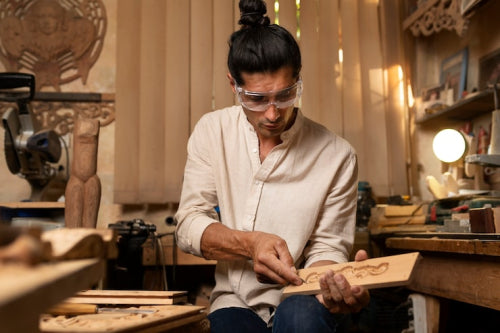
In the historic city of Udaipur, nestled beside shimmering lakes and steeped in centuries of royal heritage, master artisans continue a woodworking tradition that dates back to the era of Mewar kings. Today, this intricate craftsmanship characterized by precise carvings, durable joins, and an emphasis on timeless elegance is quietly influencing designers thousands of miles away in Canada.
The narrow streets of Udaipur resonate with the steady rhythm of chisels shaping teak and rosewood, echoing techniques passed down through generations. These methods, focused on creating furniture that endures both physically and stylistically, are finding new resonance in Canadian studios, where artisans seek sustainable materials and authentic designs to counter the dominance of mass-produced goods.
While cross-cultural influences in furniture design have long existed, the specific draw of Udaipur's heritage feels especially relevant in today's market. Consumers worldwide increasingly seek pieces with narrative depth furniture rooted in genuine craftsmanship yet adaptable to modern living. This demand has prompted Canadian designers to explore Eastern traditions, reinterpreting elements like intricate jaali screens and robust structural frames for contemporary contexts, from coastal Vancouver residences to urban Toronto apartments.
Mass-market furniture lacks heart, filling rooms with bland, short-lived pieces. Frequent breakdowns spark frustration, as replacements erode style and sentiment. At MMC Wood Creations, Udaipur artisans shape heirloom furniture with enduring craftsmanship and cozy elegance, creating pieces that echo your identity, ensuring your home radiates warmth and timeless connection. Shop Now!
Emerging Trends in Global Furniture Design
At the heart of this exchange lies a shared commitment to durability and sustainability. Udaipur's traditional woodworking prioritizes construction techniques that allow pieces to age gracefully, outlasting fleeting trends. Canadian designers, responding to heightened environmental awareness, recognize parallels in these approaches, particularly as demand grows for responsibly sourced timber.
The rise of minimalist aesthetics further amplifies this connection. Clean, uncluttered forms that highlight natural wood grains align seamlessly with Udaipur-inspired functionality. Eco-conscious consumerism has moved from fringe to forefront, with cultural fusions providing authentic alternatives in an oversaturated market.
A prime example of these converging interests appeared at IndiaWood 2025, held March 6–9 at the India Exposition Mart in Greater Noida, Delhi NCR. Forestry Innovation Consulting India Pvt. Ltd. (FII India), known as Canadian Wood, featured a spacious booth showcasing luxury interior and outdoor applications crafted from five certified British Columbia species: Western Hemlock, Douglas Fir, Western Red Cedar, Yellow Cedar, and Spruce-Pine-Fir (SPF). Through partnerships with leading Indian manufacturers such as Sumitra Woodcraft, Buildkraft India, and Artius Interior Products, the exhibit demonstrated exceptional design versatility and superior craftsmanship. Experts delivered presentations on responsible wood consumption, while the display connected with architects, designers, and industry professionals, underscoring the synergy between sustainable Canadian timber and Indian expertise. FII India supports these efforts by promoting the species across 23 cities via over 40 stockists, advancing ethical practices in furniture and construction.
Real-World Applications and Case Studies
These influences manifest in tangible creations. Canadian workshops are adapting Udaipur-style cane weaving for resilient outdoor seating capable of enduring severe weather, or incorporating subtle Rajasthan-inspired geometric motifs into sleek indoor tables suited for compact urban spaces.
Such collaborations have already yielded hybrid collections that blend heritage techniques with modern requirements, producing furniture that resonates across markets. Brands drawing from Udaipur's rich craft ecosystem, such as MMC Wood Creations, are well-positioned to capitalize on this momentum. Specializing in cane, wooden, and outdoor categories segments with high demand on visual platforms like Instagram they offer affordable yet durable pieces featuring classic, timeless designs that balance luxury aspirations with practical daily use.
As a relatively new brand, MMC Wood Creations confronts common objections by emphasizing verifiable quality and longevity, appealing to buyers in India and international markets who prioritize cultural authenticity and sustainability. Shifting consumer preferences in Canada further support this: increasing numbers favor handcrafted items with meaningful stories over disposable alternatives.
Key Challenges, Limitations, and Risks
Despite the promise, significant obstacles remain. Transcontinental supply chains complicate consistent access to traditional materials while upholding strict sustainability standards and managing costs effectively.
Scaling production risks compromising authenticity; hurried manufacturing can erode the meticulous hand-finishing central to Udaipur's tradition. Additionally, preserving these skills faces demographic pressures urbanization draws younger generations away from artisanal trades in both India and Canada, creating potential shortages of expert labor.
Opportunities, Efficiencies, and Business Impacts
These challenges, however, illuminate substantial opportunities. Integrating Udaipur's proven legacy with innovative design yields distinctive products that stand out in competitive landscapes.
For forward-thinking companies like MMC Wood Creations, this translates to broader market access through collections that respect tradition yet address current lifestyles. Their emphasis on enduring styles in popular categories aligns ideally with e-commerce expansion and social media visibility, where visual storytelling drives discovery.
Digital tools accelerate this reach, enabling instant global exposure for fusion designs that emphasize craftsmanship and environmental responsibility.
The Future of Cross-Cultural Craftsmanship
The trajectory appears clear: as design boundaries dissolve, unions between Udaipur's time-tested methods and global innovation will redefine furniture standards. The result promises pieces that are aesthetically compelling, environmentally sound, and culturally resonant.
For brands committed to this path harnessing Rajasthan's deep artisanal roots while embracing sustainable progress the rewards are profound. In an age dominated by ephemerality, delivering furniture built to last represents not just commerce, but a meaningful contribution to enduring homes and legacies.
Frequently Asked Questions
How is traditional Udaipur woodworking influencing Canadian furniture design?
Canadian artisans are incorporating Udaipur's centuries-old woodworking techniques including intricate jaali screens, robust structural frames, and durable joinery methods into contemporary furniture designs. This cross-cultural exchange reflects growing consumer demand for handcrafted pieces with authentic cultural narratives that prioritize sustainability and longevity over mass-produced alternatives. Canadian designers are reinterpreting these Rajasthani elements to suit modern living spaces, from coastal homes to urban apartments.
What are the main challenges in blending Indian traditional craftsmanship with modern furniture production?
The primary challenges include managing complex transcontinental supply chains while maintaining sustainability standards and cost-effectiveness, and the risk of compromising authenticity when scaling production. Additionally, both India and Canada face demographic pressures as urbanization draws younger generations away from artisanal trades, potentially creating shortages of skilled craftspeople who can execute the meticulous hand-finishing central to traditional woodworking.
Why are eco-conscious consumers drawn to Udaipur-inspired furniture designs?
Udaipur's traditional woodworking prioritizes construction techniques that create furniture designed to age gracefully and outlast fleeting trends, aligning with sustainable consumption values. These pieces use responsibly sourced timber and emphasize durability, natural wood grains, and minimalist aesthetics that resonate with environmentally aware buyers seeking alternatives to disposable furniture. The cultural authenticity and craftsmanship narrative also appeal to consumers who value meaningful stories behind their purchases.
Disclaimer: The above helpful resources content contains personal opinions and experiences. The information provided is for general knowledge and does not constitute professional advice.
You may also be interested in: Sustainable Practices in Small-Scale Wood Workshops
Mass-market furniture lacks heart, filling rooms with bland, short-lived pieces. Frequent breakdowns spark frustration, as replacements erode style and sentiment. At MMC Wood Creations, Udaipur artisans shape heirloom furniture with enduring craftsmanship and cozy elegance, creating pieces that echo your identity, ensuring your home radiates warmth and timeless connection. Shop Now!
Powered by flareAI.co