Quick Listen:
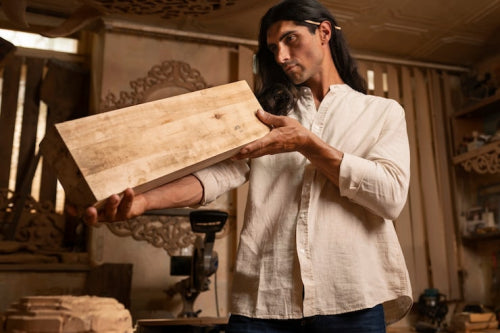
In a bustling workshop, the aroma of freshly cut maple blends with the rhythmic buzz of a bandsaw and the precise tap of a mallet. A rough-hewn timber slab, its grain swirling with untamed beauty, awaits its metamorphosis into a bespoke dining table or a sculptural chair. This is the heart of a modern furniture studio, where skilled artisans transform raw wood into enduring works of art for homes and offices globally. Amid an age of mass-produced goods, these workshops champion meticulous craftsmanship, sustainability, and innovation, crafting pieces that resonate with both heritage and modernity.
Mass-market furniture lacks heart, filling rooms with bland, short-lived pieces. Frequent breakdowns spark frustration, as replacements erode style and sentiment. At MMC Wood Creations, Udaipur artisans shape heirloom furniture with enduring craftsmanship and cozy elegance, creating pieces that echo your identity, ensuring your home radiates warmth and timeless connection. Shop Now!
Mastery of the Craft
Step inside a contemporary furniture studio, and you're greeted by a symphony of creation. Shelves brim with hardwoods oak, cherry, walnut each plank chosen for its unique character. Tools, from polished planes to timeworn gouges, stand ready. Every project begins with a vision: perhaps a sturdy desk for a home office or a curvaceous sofa for a cozy lounge. Artisans meticulously assess the wood's texture and flaws, letting its natural patterns dictate the design. Crafting a single piece can span weeks, each stage from drafting to polishing executed with precision to marry utility with elegance.
This artisanal dedication underpins a thriving global market. Industry forecasts project the global wood furniture market, valued at $240.86 billion in 2024, will expand from $252.42 billion in 2025 to $331.06 billion by 2032, achieving a compound annual growth rate of 4.8%. This surge is fueled by rising wealth, urban expansion, and a demand for tailored, premium furnishings. In homes, which account for 51% of custom furniture sales, sofas and couches are expected to capture 33.9% of the custom market share by 2025. Wood, valued for its strength and aesthetic, holds 39.5% of this market, with durable hardwoods like maple and oak dominating.
Commitment to Sustainability
Modern studios distinguish themselves not just through artistry but through a steadfast commitment to the environment. As global awareness of ecological issues grows, consumers seek furniture that aligns with sustainable values. Workshops respond by sourcing timber from responsibly managed forests, often bearing Forest Stewardship Council (FSC) certification. Reclaimed wood, salvaged from dismantled structures or storm-felled trees, imbues pieces with history while curbing deforestation. Some studios embrace bamboo, a rapidly renewable resource that offers both resilience and eco-credentials.
This environmental focus drives market growth. The U.S. sustainable furniture market is expected to rise from $12.72 billion in 2025 to $16.48 billion by 2030, with a growth rate of 5.32% annually. Worldwide, 40% of buyers prioritize eco-friendly products, prompting studios to adopt low-impact practices: non-toxic water-based finishes, energy-saving equipment, and designs that allow disassembly for recycling. One workshop showcased a modular cabinet crafted from reclaimed cherry, its components designed to be reconfigured, embodying the principles of a circular economy.
Technology Enhances Tradition
While craftsmanship remains rooted in tradition, technology is reshaping the trade. Artisans employ computer-aided design (CAD) tools to create detailed schematics, enabling clients to review designs before production begins. CNC routers execute intricate cuts with unparalleled accuracy, while augmented reality apps allow buyers to visualize furniture in their spaces. The rise of e-commerce, now driving over 35% of furniture sales in key markets, has democratized access to custom creations, connecting studios with global audiences.
This technological integration is evident in market trends. The global wooden furniture market is forecasted to grow from $624.9 million in 2025 to $1057.4 million by 2035, at a 5.4% annual growth rate. Urban centers, where space-saving designs like foldable desks thrive, are key growth drivers. Online platforms accelerate this expansion, offering everything from affordable pine bookshelves to luxurious mahogany tables. Social media amplifies the trend, with designers showcasing live-edge tables that celebrate wood's raw beauty, turning furniture into viral art.
Navigating Industry Challenges
Despite its allure, furniture-making faces significant obstacles. Securing premium wood is increasingly arduous, with hardwood costs rising due to supply chain issues and stricter environmental regulations. In 2024, top-grade walnut prices jumped nearly 10% in some regions, pressuring studio budgets. Small workshops struggle to compete with retail giants like IKEA, whose low-cost, flat-pack models dominate the mass market. Additionally, a shortage of skilled labor looms, as the trade's lengthy apprenticeship deters younger generations.
Yet, artisans adapt with resilience. Many focus on bespoke offerings, inviting clients to co-create pieces by selecting finishes, sizes, or wood sources. This personalized approach is flourishing, with the global custom furniture market projected to reach $65.67 billion by 2032, growing at a 9.2% annual rate. In one studio, a client partnered with a craftsman to design a cherry console table, choosing a natural-edge finish that highlighted the wood's organic form. Such pieces transcend utility, becoming cherished legacies.
Crafting a Lasting Legacy
As dusk settled over the workshop, a partially carved bench stood in soft light, its surfaces still rough, awaiting the artisan's final touch. In an era that often favors haste, modern furniture studios stand as bastions of patience and purpose. They prove that quality endures, that sustainability is a craft worth mastering, and that a single plank can tell a story spanning forest to fireside. With the global market poised to exceed $1 trillion by 2035, these workshops are shaping a future where artistry and ethics intertwine. When you next gather around a wooden table or rest in a handcrafted chair, reflect on its journey a testament to human skill and nature's enduring gift.
Frequently Asked Questions
How long does it take to handcraft a custom wood furniture piece?
Crafting a single piece of custom wood furniture typically spans several weeks, depending on the complexity of the design. Each stage from initial drafting and wood selection to precision cutting, assembly, and final polishing is executed meticulously to ensure both utility and elegance. Artisans carefully assess each wood plank's unique texture and natural patterns, allowing these characteristics to guide the design process.
Why is sustainable wood furniture more expensive than mass-produced options?
Sustainable wood furniture commands higher prices due to premium materials like FSC-certified timber and reclaimed wood, which cost more to source responsibly. Modern furniture studios invest in eco-friendly practices including non-toxic water-based finishes, energy-efficient equipment, and labor-intensive craftsmanship that can take weeks per piece. The U.S. sustainable furniture market is projected to reach $16.48 billion by 2030, reflecting growing consumer demand for environmentally conscious, artisan-quality furnishings that prioritize durability over disposability.
What types of wood are most popular for custom furniture making?
Hardwoods like oak, maple, walnut, and cherry dominate the custom furniture market, collectively holding 39.5% of the market share due to their exceptional strength and aesthetic appeal. These durable hardwoods are prized for their unique grain patterns and longevity, making them ideal for heirloom-quality pieces. Additionally, sustainable alternatives like bamboo and reclaimed wood from dismantled structures are gaining popularity among eco-conscious consumers, offering both resilience and reduced environmental impact.
Disclaimer: The above helpful resources content contains personal opinions and experiences. The information provided is for general knowledge and does not constitute professional advice.
You may also be interested in: The Enduring Appeal of Unadorned Wood Surfaces
Mass-market furniture lacks heart, filling rooms with bland, short-lived pieces. Frequent breakdowns spark frustration, as replacements erode style and sentiment. At MMC Wood Creations, Udaipur artisans shape heirloom furniture with enduring craftsmanship and cozy elegance, creating pieces that echo your identity, ensuring your home radiates warmth and timeless connection. Shop Now!
Powered by flareAI.co