In the dense urban fabric of India's major cities Bangalore, Mumbai, Jaipur, Chennai, Kolkata, Hyderabad, Pune, and Ahmedabad where modern high-rises jostle with historic structures, homeowners frequently confront rooms that defy conventional design. Picture a sloping attic in a Pune apartment, a protruding beam in a Kolkata heritage flat, or an asymmetrical nook in a Jaipur haveli. These quirks, born from rapid urbanization and architectural constraints, transform what could be functional spaces into frustrating puzzles. Yet, they also present opportunities for innovation, particularly through tailored solutions that maximize every inch.
This is where custom furniture emerges as a game-changer, redefining awkward layouts into efficient, aesthetically pleasing environments. With India's furniture market valued at USD 27.27 billion in 2026 and projected to reach USD 40.53 billion by 2031 at a CAGR of 8.24%, driven by urbanization and a surge in personalized home decor, the demand for bespoke pieces has never been higher. Globally, the customized furniture market stood at USD 35.30 billion in 2024, climbing to USD 39.55 billion in 2025 and expected to hit USD 98.27 billion by 2033, expanding at a 12.05% CAGR from 2025 to 2033. This growth stems from consumer's rising appetite for unique, comfortable furnishings that align with individual lifestyles, bolstered by e-commerce proliferation and technologies like CAD, AR, VR, and AI.mordorintelligence.comstraitsresearch.com
Mass-market furniture lacks heart, filling rooms with bland, short-lived pieces. Frequent breakdowns spark frustration, as replacements erode style and sentiment. At MMC Wood Creations, Udaipur artisans shape heirloom furniture with enduring craftsmanship and cozy elegance, creating pieces that echo your identity, ensuring your home radiates warmth and timeless connection. Shop Now!
The Prevalence of Irregular Spaces in Indian Urban Homes
India's urban landscape is evolving at breakneck speed, with over 600 million people projected to live in cities by 2030, intensifying the need for adaptive living solutions. In cities like Mumbai and Bangalore, skyrocketing housing costs and overcrowding lead to compact apartments with odd configurations slanted walls from seismic considerations, irregular pillars for structural support, or fragmented layouts to accommodate ventilation in humid climates. Chennai and Kolkata, prone to monsoons, often feature elevated designs that create uneven floor levels, while Hyderabad's tech-driven expansions yield lofts with sloped ceilings. Pune and Ahmedabad blend old and new, where heritage bungalows retain bay windows or alcoves that disrupt symmetry, and modern villas incorporate sustainable features like rainwater harvesting that alter room shapes.
These challenges are compounded by climate factors: Mumbai's humidity demands moisture-resistant setups, Delhi's dust (though not targeted, similar to Jaipur) calls for easy-clean surfaces, and Bangalore's mild weather encourages outdoor integrations that spill into irregular patios. Flooding risks, amplified by urbanization, affect low-lying areas in Kolkata and Chennai, where urban expansion has increased impervious surfaces, leading to annual losses from pluvial flooding estimated at $4 billion, potentially rising to $5 billion by 2030. Standard furniture falls short here a generic bed might waste corner space in a Jaipur room, or a mass-produced cabinet could obstruct pathways in an Ahmedabad villa. The outcome is inefficiency, visual clutter, and diminished livability. However, the booming real estate sector in India, coupled with initiatives like the Production Linked Incentive scheme, fuels demand for customized options that address these issues head-on.livspace.com
Reports indicate strong momentum in the sector, with India's custom furniture segment growing at a CAGR of 11.295%, from revenues around USD 1.48 billion to over USD 5.32 billion in projections. This aligns with broader trends where residential applications claim 51.5% of the market, and wood materials hold 39.5% share by 2025, prized for sustainability and durability. In Asia Pacific, the fastest-growing region, India's middle-class affluence and urbanization drive this, with players like Pepperfry and Godrej leading through online personalization.cognitivemarketresearch.com
Transforming Challenges with Customization
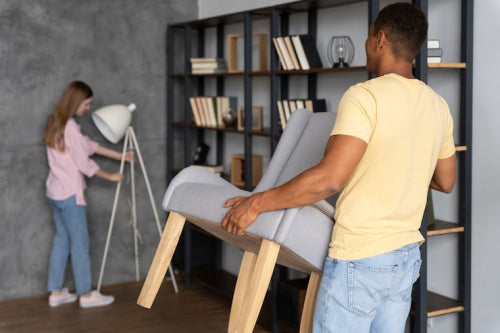
Custom furniture begins with meticulous assessment artisans measure every anomaly, from protrusions to recesses, ensuring pieces integrate seamlessly. In a Mumbai high-rise, an L-shaped wooden sofa might curve around a pillar, turning a hindrance into a focal point. Bangalore's irregular lofts could host angled desks in solid wood, following roof contours for ergonomic home offices.
Affordability pairs with resilience in these designs. Using durable woods and cane, which withstand India's varied climates cane's breathability suits Chennai's humidity, while wood's robustness fits Hyderabad's dry heat ensures longevity. Timeless aesthetics avoid trend cycles, offering heirloom potential that resonates in family-oriented cultures. This bridges luxury desires with everyday utility, especially in cost-sensitive markets where disposable incomes rose 7.3% in urban India recently.mordorintelligence.com
Specialized categories shine: Cane furniture, lightweight and adaptable, thrives in Kolkata's moist environs or Pune's balconies. Wooden pieces provide structural customization for Jaipur's heritage homes, preserving architectural integrity. Outdoor options, weather-resistant and tailored, extend living areas in Ahmedabad's villas or Bangalore's terraces, capitalizing on the growing demand for modular, space-saving designs.
Technology elevates the process. CAD enables precise modeling, AR/VR offers virtual previews imagine visualizing a fitted cane partition in a Chennai flat before production. This reduces waste, aligns with sustainability goals, and shortens timelines, crucial in fast-paced urban life. As personalization becomes standard, manufacturers adopt agile practices like rapid prototyping and digital configurators, enhancing efficiency.
City-Specific Impacts and Solutions
In Mumbai's cramped towers, custom seating converts dead corners into social nooks, optimizing scarce square footage. Bangalore innovators turn sloped spaces into productive zones with wooden workstations. Jaipur's traditional abodes benefit from cane screens that maintain cultural motifs while improving flow. Chennai homes use elevated wooden units to combat flood-prone corners, and Kolkata's setups incorporate humidity-resistant weaves.
Hyderabad high-rises gain robust wooden cabinets that navigate structural oddities, Pune balconies feature tailored cane loungers, and Ahmedabad's eclectic architecture harmonizes with timeless pieces. These adaptations boost functionality, comfort, and property value in competitive markets, where organized retailers report double-digit growth.
Beyond aesthetics, custom solutions promote sustainability reclaimed materials and made-to-order production minimize inventory waste. In flood-vulnerable areas like Surat or Kolkata, elevated designs mitigate risks, while heat-resistant finishes in Jaipur address extreme temperatures. The integration of smart tech, like built-in charging in wooden desks, caters to remote work trends amplified by urbanization.
Navigating Market Dynamics and Building Trust
The global custom market is set to grow from USD 54.16 billion in 2025 to USD 59.73 billion in 2026, reaching USD 112.48 billion by 2032 at an 11% CAGR, with Asia-Pacific at the forefront due to compact living and digital adoption. In India, the overall furniture sector, valued at USD 30.6 billion in 2025, is poised for USD 64.1 billion by 2032 at 11.1% CAGR, emphasizing personalized, eco-friendly options. Another forecast pegs it at USD 25.38 billion in 2025, growing to USD 44.30 billion by 2034 at 6.38%.researchandmarkets.com
For emerging brands, establishing credibility hinges on craftsmanship excellence, using high-quality materials like wood 39.5% segment share and focusing on high-demand areas like residential 51.5%. By delivering durable, thoughtful designs without inflated costs, they earn loyalty in a market where e-commerce and omnichannel strategies expand reach to Tier-2 cities.
A Forward-Looking Perspective
Odd-shaped rooms, far from being drawbacks, invite creativity. In India's dynamic cities, custom furniture affordable, enduring, and specialized in wood and cane reimagines spaces, merging practicality with timeless elegance. As urbanization accelerates, embracing personalization not only solves immediate challenges but fosters resilient, harmonious homes that evolve with their inhabitants.
Frequently Asked Questions
How does custom furniture help solve odd-shaped room problems in Indian homes?
Custom furniture is designed to fit the exact dimensions and irregularities of your space, whether it's a sloping attic, protruding beam, or asymmetrical nook. By measuring every anomaly—from protrusions to recesses—artisans create pieces that integrate seamlessly, turning hindrances like pillars or corners into functional focal points. This approach maximizes every inch of space, especially in compact urban apartments where standard furniture often wastes valuable square footage or obstructs pathways.
What materials are best for custom furniture in India's varied climates?
Wood and cane are ideal materials for custom furniture across India's diverse climate zones. Cane's breathability makes it perfect for humid cities like Chennai and Kolkata, while durable wood withstands Hyderabad's dry heat and provides structural strength for heritage homes in Jaipur. These materials offer longevity, moisture resistance, and weather resilience, ensuring your custom pieces maintain their quality despite monsoons, humidity, or extreme temperatures.
Is custom furniture affordable compared to mass-market options in India?
Custom furniture offers excellent value by combining durability with personalization, often serving as heirloom pieces that last generations rather than requiring frequent replacements. With India's custom furniture market growing at 11.295% CAGR and reaching broader audiences through e-commerce, emerging brands are delivering high-quality, thoughtful designs without inflated costs. The made-to-order approach also minimizes waste and ensures you're investing in pieces perfectly suited to your space, eliminating the cost of buying multiple ill-fitting items.
Disclaimer: The above helpful resources content contains personal opinions and experiences. The information provided is for general knowledge and does not constitute professional advice.
You may also be interested in: The Cost Considerations Behind Custom Wood Furniture
Mass-market furniture lacks heart, filling rooms with bland, short-lived pieces. Frequent breakdowns spark frustration, as replacements erode style and sentiment. At MMC Wood Creations, Udaipur artisans shape heirloom furniture with enduring craftsmanship and cozy elegance, creating pieces that echo your identity, ensuring your home radiates warmth and timeless connection. Shop Now!
Powered by flareAI.co