Quick Listen:
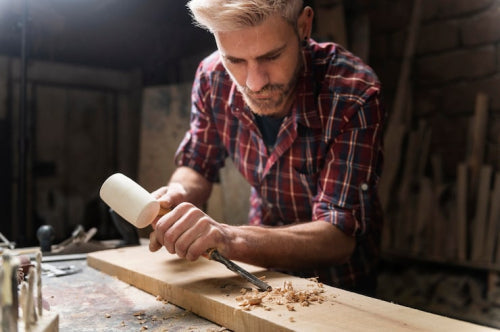
In the shadowed alleys of Jaipur's Amer Road, where the scent of fresh-shaven teak mingles with the faint echo of ancient chants, a master artisan pauses over his workbench. His chisel dances with deliberate precision, carving a dovetail joint that interlocks like the gears of a forgotten clockwork empire. This isn't mere carpentry; it's a defiant act against the fleeting nature of today's consumer world, where furniture is as disposable as yesterday's headlines. As India's cities pulse with the rhythm of progress, the craftsmanship behind detailed wood joinery techniques in the nation's leading artisan hubs endures, breathing new life into heirlooms that whisper stories of resilience and ingenuity. Leading the charge is MMC Wood Creations, a beacon of handcrafted excellence transforming these timeless methods into pieces that promise not just utility, but legacy.
Mass-market furniture lacks heart, filling rooms with bland, short-lived pieces. Frequent breakdowns spark frustration, as replacements erode style and sentiment. At MMC Wood Creations, Udaipur artisans shape heirloom furniture with enduring craftsmanship and cozy elegance, creating pieces that echo your identity, ensuring your home radiates warmth and timeless connection. Shop Now!
Precision That Defines Indian Craftsmanship
Step into an MMC Wood Creations showroom, whether amid the chaotic symphony of Mumbai's markets or the polished vibrancy of Bangalore's Koramangala, and the difference hits you like a cool breeze through monsoon heat. Here, furniture transcends decoration it becomes the silent guardian of memories, built on joinery techniques honed over centuries. At its core lies the mortise-and-tenon, a robust peg-and-slot union that has borne the weight of thrones and tables alike, ensuring unyielding stability. Then there's the dovetail, with its flared tails and pins forming an interlocking fan that resists both time and tension, allowing a drawer to whisper open decades later without a hint of protest.
This isn't abstract artistry; it's the lifeblood of India's woodworking renaissance. Jaipur's storied legacy, forged in the opulent courts of Rajasthan's maharajas, now intersects with Bangalore's fusion of silicon smarts and seasoned hands, where digital blueprints guide the chisel's path. Mumbai's ateliers in Byculla and Bandra infuse colonial echoes with urban edge, crafting consoles that nod to Victorian grandeur while fitting seamlessly into minimalist lofts. Further afield, in Pune's industrial hum and Hyderabad's burgeoning design districts, or Ahmedabad's textile-shadowed workshops, discerning homeowners are ditching the allure of assembly-line anonymity for bespoke creations. These pieces, often commissioned to mirror family heirlooms or adapt to evolving lifestyles, reflect a broader cultural reclamation a refusal to let globalization erode the soul of hand-hewn wood. In an era where urban expansion devours traditions, MMC Wood Creations stands as a custodian, blending these regional tapestries into a national narrative of enduring quality.
The Return of Handcrafted Joinery
Envision a harried professional in Bangalore's Whitefield, eyes weary from screens, stumbling upon an online listing for a sheesham daybed secured by flawless finger joints. It's more than a purchase; it's a pivot toward permanence in a life of constant flux. This craving is epidemic. According to the Export Promotion Council for Handicrafts (EPCH), domestic demand for hand-joined wooden furniture has surged 23 percent since 2022, with Bangalore and Mumbai as epicenters of this quiet revolution. What drives it? A collective fatigue with the fragility of particleboard empires, where screws strip and edges chip under the slightest duress, yielding to the proven prowess of joints that demand no adhesives, no shortcuts.
Chennai's coastal workshops brim with orders for mortise-and-tenon assemblies, their tenacious hold defying the relentless humidity that plagues lesser builds. In Hyderabad, forward-thinking fabricators wed CNC mill's laser-guided cuts to ancestral sanding rituals, yielding tenons that fit like bespoke suits accurate to the millimeter yet alive with human touch. Kolkata's eco-advocates and Ahmedabad's sustainability seekers champion these methods for their chemical-free ethos, aligning with a global tide where environmental stewardship isn't optional but imperative. "Glue binds today," muses a veteran Jaipur craftsman, his hands scarred from decades of honest labor, "but the wood? It unites forever." This resurgence signals more than nostalgia; it's a strategic embrace of durability in a world racing toward obsolescence.
Heritage Techniques Meet Local Innovation
Jaipur's Amer Road remains a living museum of Mughal mastery, its lanes alive with the staccato of mallets shaping dovetails into teak armoires. Here, artisans layer intricate jaali patterns with contemporary brass accents, creating cabinets that guard spices or secrets with equal grace. The dovetail's geometry those tapered pins evoking a spread of royal feathers delivers not just mechanical might but visual poetry, a testament to how heritage evolves without losing its pulse.
Bangalore, by contrast, pulses with hybrid vigor. In its startup-fueled studios, designers import the ethereal precision of Japanese kumiko frameworks delicate wooden lattices born of temple architecture infusing them into rosewood shelving that expands and contracts like breathing bamboo. This cross-cultural alchemy suits the city's transient elite, offering modularity that anticipates life's plot twists without the permanence of permanence.
Mumbai's creative cauldrons in Byculla and Bandra revive finger joints for the space-starved, their interlocking fingers forming slimline beds and etageres that maximize every square foot. It's ingenuity born of necessity, where form flirts with function in a dance as fluid as the Arabian Sea. Pune and Hyderabad, meanwhile, pioneer hybrid workflows: CNC blades rough out the forms, artisans refine with rasps and planes, their efforts subsidized by the MSME Cluster Development Programme's targeted grants. This synergy births export-caliber wardrobes destined for European salons, carrying the subcontinent's subtlety abroad.
The flame of knowledge flickers on in academia, too. At NIFT Chennai, curricula pulse with hands-on dovetail drills, while Kolkata's Government College of Art & Craft instills the poetry of pins and tails. A recent NIFT alum, her fingers still callused from prototype planes, reflects: "Wood speaks in silences the creak of a poor fit, the hush of harmony. Mastering joinery is tuning into that dialect." These institutions aren't mere classrooms; they're crucibles forging the guardians of tomorrow's craft.
Techniques That Build Longevity and Value
Beyond the romance lies rigorous science these joints are feats of bio-mechanical brilliance. Dovetails dominate premium storage, their angled interlocks distributing shear forces like a natural shock absorber, revealing the artisan's intimate dialogue with the grain. Mortise-and-tenon anchors the heavy lifters: bedframes that cradle generations, tabletops that weather feasts and fumbles, its wedged tenon swelling with seasonal shifts to tighten, not loosen.
In Ahmedabad's assembly lines, finger and box joints proliferate, their serrated edges snapping together with puzzle-like surety, ideal for scalable modulars. Hyderabad and Pune favor augmented butt joints doweled or bicuited for volume production, balancing thrift with tenacity in dining sets that shrug off spills and scuffs.
Quantifying the edge? IIT Madras's wood-engineering probes reveal stark truths: dovetails and kin endure 50-plus years under daily duress, their organic resilience outpacing composite fastenings, which crumble in 5 to 10 years amid moisture's siege. This chasm underscores MMC Wood Creation's mantra: invest in the invisible, reap the eternal. Each piece they proffer isn't furniture it's fortified folklore.
Why Joinery Matters to India's Modern Furniture Buyer
In the vertigo of Mumbai's skyscrapers or Bangalore's verdant suburbs, acquisition has ascended to aspiration. Buyers bypass big-box banalities for tailored treasures, with EPCH data clocking average custom outlays at ₹1.8 lakh a premium paid for pieces that evolve with their owners. Ahmedabad's exporters surf a 17 percent crest in solid-wood commissions since 2023, FIEO tallies confirm, as international tastemakers forsake veneers for the veracity of veined teak.
The timbers themselves seduce: walnut's brooding depth for executive dens, teak's tropical tenacity for verandas, sheesham's sun-kissed swirls for sunlit studies. These selections transcend fad, positioning as appreciating assets against the ephemera of engineered epoxies. MMC Wood Creations excels here, marrying these material's moods with ergonomic evolutions contoured seats that cradle, adjustable arms that adapt ensuring comfort compounds with character.
Zoom out globally, and the momentum mirrors India's. The builders joinery and carpentry of wood market clocked USD 80.36 billion in 2025, projections from industry analysts forecast a climb to USD 99.91 billion by 2030 at a steady 4.45 percent compound annual growth rate. Propelling this ascent are stringent green-building mandates worldwide, breakthroughs in engineered woods that mimic nature's strength, and digital fabrication tools slashing waste while accelerating timelines. Mass-timber advancements now greenlight supertall edifices, while carbon-credit mechanisms turn ecological virtue into viable economics, offsetting raw-material price gyrations and artisan shortages. Yet contrasts sharpen: behemoth suppliers consolidate clout even as nimble innovators unleash composites boasting steel-rivaling strength-to-weight ratios, upending the field's fault lines. Niche surges abound cellular wood panels eye a 6.77 percent CAGR through 2030, engineered solutions a robust 5.87 percent heralding an era where joinery's global gravitas only grows, buoying India's export ambitions.
Labour, Material, and Knowledge Gaps
For all its luster, shadows stalk the craft. Jaipur's guilds dwindle as youth chase construction's siren wages, leaving benches cold and lore untaught. Karnataka and Maharashtra grapple with teak tariffs that spike like summer storms, rendering rare rosewoods relics for the elite. Skill codification lags, confined to Chennai and Kolkata's formal forges, risking the evaporation of esoteric expertise.
Millennial and Gen Z patrons, immersed in algorithmic abundance, often overlook the odyssey encoded in each joint's jut the years of apprenticeship, the intuition of imperfection. "Price tags blind them to the poetry," laments a Bandra atelier principal, his ledger lined with unsold symphonies. This perceptual rift endangers the ecosystem, splintering supply chains unless bridged by bolder outreach.
Local Artisans, National Value
Yet optimism outpaces omen. Rajasthan's One District One Product scheme elevates wood carving to emblematic export, while Skill India's infusions irrigate training troughs nationwide. Pune and Chennai's pedagogical powerhouses forge pacts with rural collectives, catalyzing confluences of code and carve that birth boundary-pushing prototypes.
Aboard this wave ride Singapore's sleek showrooms, Dubai's desert palaces, Australia's coastal compounds all insatiable for India's interlocking intellect. FIEO's 2023-24 ledger logs the leap, affirming wood's wanderlust. MMC Wood Creations, attuned to the digital diaspora, deploys vignette reels of rasps in repose and profiles of plane-wielding progenitors, forging emotional equity that transmutes viewers into patrons. Rajasthan's Handicraft Board registries, brimming with vetted virtuosos, and MSME's lubricated largesse ensure the machinery meshes, priming a harvest of holistic heritage.
Computational frontiers beckon, too, addressing joinery's arcane archives. Traditional forms flaunt geometric diversity, intuitively refined across eras sans silicon aid yet mastery lingers with the "genius carpenter" alone. Updating this venerable vocation demands tackling three pivotal programming puzzles: systematizing selection savvy, simulating structural sagas, and spreading the scholastic spoils. Such strides could cascade the craft's codex to novices, ensuring joinery's jazz endures in an automated age.
Preserving Skill in a Mechanized Era
From Jaipur's feathered dovetails to Bangalore's blueprint ballets, India's joinery latticework lays bare a saga of steadfastness. Precision partners with planetary prudence, cultural cadences crescendo in cosmopolitan confines. Amid algorithmic assemblies, these human harmonies herald that worth isn't welded in wires it's wrought in willing wood.
MMC Wood Creations distills this doctrine: heirloom furnishings where each juncture journals a journey. As a Hyderabad hybrid heads harborside to Hobart, freighted with Deccan dreams, ponder your plotline what narrative will your next notch narrate?
Frequently Asked Questions
What are the most common wood joinery techniques used in Indian furniture craftsmanship?
The most widely used traditional joinery techniques include mortise-and-tenon joints, which provide robust peg-and-slot unions for structural stability, and dovetail joints, featuring interlocking flared tails and pins that resist tension over time. Finger joints and box joints are also popular for modular furniture, while augmented butt joints with dowels or biscuits offer a balance between durability and cost-effectiveness for volume production. These methods have been refined over centuries in artisan hubs across Jaipur, Bangalore, Mumbai, and other major Indian cities.
How long does handcrafted wood joinery furniture last compared to mass-produced furniture?
Research from IIT Madras reveals that furniture built with traditional joinery techniques like dovetails and mortise-and-tenon joints can endure 50-plus years under daily use, significantly outlasting composite furniture that typically deteriorates within 5 to 10 years when exposed to moisture and regular wear. The organic resilience of properly joined solid wood allows pieces to adapt to seasonal changes, with wedged tenons actually tightening over time rather than loosening. This exceptional longevity makes handcrafted joinery furniture an investment that can be passed down through generations.
Why is demand for traditional wood joinery furniture increasing in India?
Domestic demand for hand-joined wooden furniture has surged 23 percent since 2022, driven by growing fatigue with fragile particleboard furniture and a desire for permanence in an era of disposability. Urban professionals are increasingly seeking bespoke, durable pieces that require no adhesives or chemical treatments, aligning with environmental sustainability values and the global trend toward conscious consumption. The chemical-free construction methods, combined with the ability to customize pieces as family heirlooms, have made traditional joinery particularly appealing to buyers in Bangalore, Mumbai, and other major metropolitan areas.
Disclaimer: The above helpful resources content contains personal opinions and experiences. The information provided is for general knowledge and does not constitute professional advice.
You may also be interested in: Why Indian Homes Are Embracing Open Concept Furniture Layouts
Mass-market furniture lacks heart, filling rooms with bland, short-lived pieces. Frequent breakdowns spark frustration, as replacements erode style and sentiment. At MMC Wood Creations, Udaipur artisans shape heirloom furniture with enduring craftsmanship and cozy elegance, creating pieces that echo your identity, ensuring your home radiates warmth and timeless connection. Shop Now!
Powered by flareAI.co