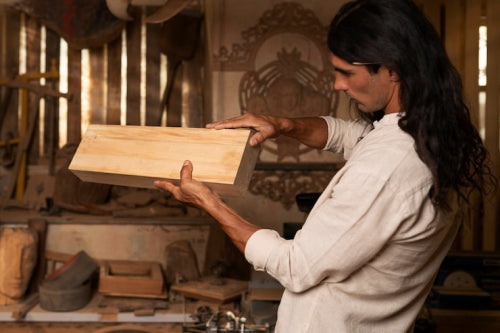
In the vibrant workshops of Jaipur, where artisans meticulously carve sheesham wood by hand, or in Bangalore's cutting-edge studios where CNC machines hum alongside skilled craftsmen, India's custom solid wood furniture sector is undergoing a profound transformation. Makers are skillfully merging deep-rooted traditions with contemporary innovations to create pieces that resonate with modern urban lifestyles while honoring timeless craftsmanship.
Mass-market furniture lacks heart, filling rooms with bland, short-lived pieces. Frequent breakdowns spark frustration, as replacements erode style and sentiment. At MMC Wood Creations, Udaipur artisans shape heirloom furniture with enduring craftsmanship and cozy elegance, creating pieces that echo your identity, ensuring your home radiates warmth and timeless connection. Shop Now!
Balancing Tradition and Innovation in Custom Wood Furniture Design Across India's Craft Hubs
Artisan heritage in centers like Jaipur, Ahmedabad, and Kolkata is adapting seamlessly to modern design tools, sustainable practices, and evolving consumer demands in bustling cities such as Bangalore, Mumbai, Pune, Chennai, and Hyderabad.
Step into a typical high-rise apartment in Mumbai or Pune, and you're likely to encounter elegant, multifunctional solid wood furniture an extendable dining table that accommodates guests or a modular storage unit maximizing limited space. These are not mass-produced imports but bespoke creations from local workshops, where generational artisans partner with designers using digital tools to deliver precision and personality.
In traditional strongholds like Jaipur and Ahmedabad, woodworking remains a cultural cornerstone, with families preserving techniques honed over centuries in teak and rosewood. Yet, even these hubs are embracing change. In contrast, tech-savvy cities like Bangalore and Hyderabad see surging demand for ergonomic, modular, and environmentally responsible designs tailored to compact urban dwellings.
This evolution is fueled by broader market forces. Rapid urbanization and rising disposable incomes in emerging economies, including India, are driving preference for durable, personalized wood furniture. The global wood furniture market, valued at $235.3 billion in 2023, is projected to reach $327.7 billion by 2033, growing at a CAGR of 3.4% from 2024 to 2033, propelled by demand for sustainable and customizable options.
More specifically, the customized furniture segment expanded from $48.78 billion in 2024 to $54.16 billion in 2025 and is expected to hit $112.48 billion by 2032, advancing at an impressive 11% CAGR, thanks to digital design platforms and consumer desire for bespoke pieces.
Emerging Trends: Preserving Identity Amid Adaptation
In India's key craft clusters Bangalore, Pune, Hyderabad, Jaipur, Ahmedabad, Chennai, Kolkata, and Mumbai a sophisticated hybrid model is emerging. Studios in innovation-heavy cities like Bangalore and Pune routinely employ CAD software for detailed prototyping and CNC technology for initial cuts, reserving final hand-finishing for artisans. This approach minimizes material waste, enhances accuracy, and accelerates production without compromising the distinctive human touch.
Material selection remains anchored in regional availability and sustainability. In Ahmedabad, Jaipur, and Chennai, makers prioritize locally sourced teak, sheesham, mango wood, and reclaimed timber, responding to heightened environmental awareness. Reclaimed options prove especially popular in humid areas like Chennai and Kolkata, combining durability with eco-credentials.
Functional design dominates in space-constrained metros. Mumbai, Bangalore, and Pune residents favor multifunctional items storage-integrated beds, extendable tables, and modular seating that address apartment living challenges head-on, aligning with global trends toward space optimization amid urbanization.
The overall furniture market, estimated at $768.78 billion in 2025, is forecast to climb to $953.14 billion by 2030 at a 4.39% CAGR, driven by urban migration, sustainability imperatives, and expanding middle-class purchasing power in regions like Asia-Pacific.
Regional Variations: Distinct Approaches in Eight Key Cities
Each city contributes unique strengths to this narrative. Jaipur and Ahmedabad excel in safeguarding intricate hand-carving and mortise-and-tenon joinery, refreshing classic forms with cleaner lines to appeal to today's discerning buyers in luxury homes and exports.
Bangalore and Pune lead in tech-artisan integration, where digital tools streamline workflows, reduce errors, and promote resource efficiency, enabling scalable custom production.
In Chennai and Hyderabad, manufacturers invest in specialized wood treatments informed by local climate data, ensuring longevity against humidity or temperature swings.
Kolkata witnesses a renaissance of heritage styles, adapting ornate colonial-influenced woodworking for contemporary homes, hospitality venues, and cultural projects.
Navigating Challenges in a Dynamic Landscape
Despite promising growth, obstacles persist. Transmitting specialized skills to the next generation remains difficult in Jaipur, Kolkata, and Ahmedabad, where younger workers often prefer corporate opportunities over traditional apprenticeships.
Escalating costs for premium materials and expert labor strain operations in high-overhead cities like Mumbai and Bangalore. Perhaps most critically, there's the peril of excessive automation eroding the authentic handcrafted appeal that differentiates these products from industrialized competitors.
Seizing Opportunities for Lasting Impact
These challenges are outweighed by substantial opportunities. Custom solid wood furniture is increasingly viewed as a premium, intergenerational asset, particularly among affluent consumers in Bangalore, Mumbai, Pune, and Chennai who prioritize enduring quality and heirloom value.
Alignment with stringent sustainability standards unlocks new avenues, from responsible sourcing to circular design principles. Distinctive regional aesthetics from Jaipur, Ahmedabad, and Kolkata are attracting international interest, positioning Indian craftsmanship for global export success.
Broader projections reinforce optimism: the global furniture sector is set to reach $995.42 billion by 2029, expanding at a 5.9% CAGR, bolstered by real estate booms, eco-conscious trends, and multifunctional innovations.
The Path Forward: Amplifying Craftsmanship Through Thoughtful Innovation
Leading voices from India's premier design institutions and handicraft councils concur that true progress lies in leveraging technology to elevate, rather than eclipse, human expertise. The most resilient enterprises in Bangalore, Mumbai, Jaipur, Chennai, Kolkata, Hyderabad, Pune, and Ahmedabad are those committing to artisan development programs, in-depth studies of local woods, and collaborative designer networks.
Ultimately, while machines offer unmatched precision and efficiency, the irreplaceable allure of handcrafted solid wood its subtle grains, warm textures, and inherent stories ensures its enduring place in Indian homes. This harmonious blend of tradition and innovation not only sustains a vital industry but forges lasting legacies in living spaces across the nation.
Frequently Asked Questions
How is India's custom solid wood furniture industry balancing traditional craftsmanship with modern technology?
Indian furniture makers are adopting a hybrid approach where digital tools like CAD software and CNC machines handle initial design and cutting, while skilled artisans perform final hand-finishing work. This method preserves the distinctive human touch and authentic handcrafted appeal while improving precision, reducing material waste, and accelerating production. Cities like Bangalore and Pune lead this tech-artisan integration, while traditional hubs like Jaipur and Ahmedabad continue to excel in preserving intricate hand-carving and joinery techniques.
What types of wood are most commonly used for custom furniture in Indian cities?
Indian furniture makers prioritize locally sourced and sustainable woods including teak, sheesham, mango wood, and reclaimed timber, chosen based on regional availability and environmental considerations. Reclaimed wood options are particularly popular in humid coastal cities like Chennai and Kolkata due to their durability and eco-friendly credentials. This focus on sustainable material selection aligns with growing environmental awareness and helps reduce the carbon footprint of custom furniture production.
Why is custom solid wood furniture becoming more popular in urban Indian homes?
The demand for custom solid wood furniture is surging in Indian metros due to the need for multifunctional, space-saving designs that suit compact apartment living. Urban residents in cities like Mumbai, Bangalore, and Pune favor bespoke pieces like storage-integrated beds, extendable dining tables, and modular seating that maximize limited space while offering personalization. Additionally, affluent consumers increasingly view custom solid wood furniture as a premium, intergenerational asset that provides enduring quality and heirloom value compared to mass-produced alternatives.
Disclaimer: The above helpful resources content contains personal opinions and experiences. The information provided is for general knowledge and does not constitute professional advice.
You may also be interested in: Sustainable Practices in Small-Scale Wood Workshops
Mass-market furniture lacks heart, filling rooms with bland, short-lived pieces. Frequent breakdowns spark frustration, as replacements erode style and sentiment. At MMC Wood Creations, Udaipur artisans shape heirloom furniture with enduring craftsmanship and cozy elegance, creating pieces that echo your identity, ensuring your home radiates warmth and timeless connection. Shop Now!
Powered by flareAI.co