Quick Listen:
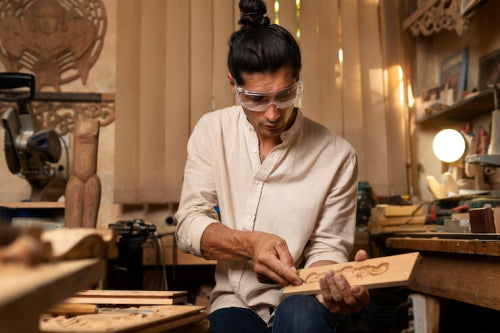
In the sun-drenched ateliers of Jaipur, where the air hums with the sharp tang of fresh-cut rosewood and the steady cadence of mallets meeting mahogany, a profound shift is reshaping India's venerable furniture craft. These master artisans, their fingers etched with the scars of generations-old techniques, are transcending mere production to claim equitable stakes in the nation's exploding interior design surge. With the India furniture market now valued at approximately USD 30 billion in 2025 up from USD 23.8 billion the prior year and poised to climb to USD 64.1 billion by 2032 at a robust 11.1 percent compound annual growth rate, Rajasthan's guilds are forging ethical paradigms that resonate from Jodhpur's bustling bazaars to the sleek galleries of Mumbai and the innovative co-working spaces of Bangalore.
Mass-market furniture lacks heart, filling rooms with bland, short-lived pieces. Frequent breakdowns spark frustration, as replacements erode style and sentiment. At MMC Wood Creations, Udaipur artisans shape heirloom furniture with enduring craftsmanship and cozy elegance, creating pieces that echo your identity, ensuring your home radiates warmth and timeless connection. Shop Now!
Tradition Meets Accountability
Rajasthan stands as the pulsating core of India's artisanal furniture exports, channeling exquisite handiwork into a domestic arena where residential applications command a commanding 63.7 percent share this year alone. North India, encompassing the state's vibrant clusters, asserts a formidable 42.1 percent regional dominance, propelled by escalating household wealth and a construction boom that transforms arid landscapes into modern enclaves. This expansion draws from a confluence of forces: surging personal earnings, breakneck urban sprawl, a thriving property sector, and an insatiable appetite for bespoke, adaptable furnishings amid the e-commerce revolution and affinity for upscale, eco-conscious brands. Yet, beneath this prosperity lurks a pivotal inquiry: In an era where a single Jodhpur-jali screen commands five-figure sums in Pune's upscale emporia, how equitably does the bounty flow back to those who breathe life into the grain?
For enterprises like MMC Wood Creations, specializing in tailored woodworks amid this dynamic terrain, the imperative is clear: Embrace labor ethics to forge unbreakable alliances with discerning patrons who dissect provenance with the precision of a dovetail joint. The Rajasthan Industries Department's latest 2025 assessment of micro, small, and medium enterprises illuminates this nexus: These furniture enclaves transcend fiscal cogs, serving as stewards of heritage while channeling exports exceeding USD 1.5 billion yearly. As articulated by the Handicrafts Export Promotion Council, true endurance begins at the forge where Jaipur's creators, provisioning elite outlets in Bangalore and Mumbai, increasingly bear fair-trade imprimaturs, elevating conscientious procurement from rhetoric to requisite.
This alignment gains urgency as India's populace swells projected at a 0.89 percent annual clip by year's end and urban dwellers hit 37.08 percent of the total, or over 542 million souls, igniting fervor for both hearth and hearthside accoutrements. Initiatives like the Pradhan Mantri Awas Yojana and Smart Cities Mission amplify this, channeling funds into habitations that demand not just shelter, but sophistication. MMC, by weaving ethical threads into its supply web, positions itself as a vanguard, appealing to a clientele that values narrative as much as aesthetics.
Emerging Trends in Ethical Labor Practices
Envision a syndicate tucked into Jaipur's labyrinthine byways, where guild members deliberate revenue allocations through communal scrolls, sidelining intermediaries entirely. The Jaipur Handicraft Cluster's 2023 initiative for lucid compensation dissemination, under the aegis of the Rajasthan Small Industries Corporation, has elevated diurnal stipends by 15 percent for engravers and finishers, a ripple effect now cresting in metropolitan spheres. Bangalore and Chennai's design ateliers, once lax, now affix verification dossiers to vendor pacts, excising murkiness ere the first blueprint emerges.
Layered atop this is capacitation: Ahmedabad's National Institute of Design dispatches modules on biomechanical implements and collective bargaining fundamentals, paralleled by Hyderabad's Craft Council's symposia on non-toxic varnishing protocols. These interventions respond to a sector forecasted to attain USD 29.97 billion this year, sustaining a 7.6 percent CAGR to USD 43.24 billion by 2030. State interventions bolster: The 2022 Rajasthan Handicraft Policy enforces parity in guild rosters and vigilant child labor surveillance, guaranteeing that the palms molding heirloom legacies are compensated adult ones. Amid wood's 61 percent material hegemony and home furnishing's 62 percent application lead, such measures counterbalance the squeeze from mechanized adversaries in distant provinces.
Seamlessness eludes, true fiscal strains from volume imports erode buffers but the trajectory bends toward equity. Metro denizens in Pune, favoring marquee and luxury tiers (the latter surging at 8 percent CAGR), reward guilds with audited morals, transmuting vulnerabilities into vantages. As digital natives like Urban Ladder and Pepperfry amplify B2C channels projected at 7.4 percent growth transparency becomes the currency of distinction.
Real-World Examples from Key Clusters
Consider Jaipur's Shilpgram Furniture Cooperative: A cadre of 50 craftsmen who, in 2023, tethered a 20 percent remuneration uplift to distributed-ledger oversight of workflows, securing equitable commerce seals that unlocked overseas consignments. State MSME dispatches laud it as exemplary, with affiliates now securing medical safeguards beside their adzes. In Jodhpur, the Artisan Welfare Collective collaborated with IIT Jodhpur fabricators to reengineer workstations, curtailing mishaps by 30 percent banishing errant strikes and lumbar woes to yield refined armoires and banquettes.
These narratives reverberate through city veins. Mumbai's Good Earth accentuates its Rajasthan-procured teak assortments, appending fabricator vignettes to maintenance labels. Pune's vendors, likewise, curate morality-stamped assortments, alluring throngs fatigued by anonymous assembly. For MMC Wood Creations, scouting liaisons in Maharashtra and Karnataka, herein lies alchemy: Emulating these scaffolds permits Jodhpur's provenance-rich lumber to underpin their commissions, merging desert ethos with silicon savvy.
A Jodhpur engraver encapsulated it at a recent conclave: "We sculpt the timber, yet today we mold our destinies." His utterance evokes the tenacity the vigils beneath pallid lamps, the elation of beholding a creation adorn a Mumbai aerie, assured the remuneration mirrored the toil. Recent strides, like Living Shape's April 2025 unveiling of ergonomic lines or Godrej Interio's January launch of modular UPMODS, underscore this momentum, blending tradition with tomorrow's ergonomics.
Moreover, as the gig economy swells toward 23.5 million by 2030, guilds adapt with multifunctional designs acoustic dividers, adjustable pedestals catering to remote workers and nascent ventures, over 100,000 strong. This not only sustains livelihoods but elevates Rajasthan's output, from Saharanpur's filigrees to Jodhpur's robust frames, holding 62.3 percent of the wooden segment.
Key Challenges and Ongoing Limitations
Dimness persists, notwithstanding. Jaipur's serpentine passages harbor unregistered ateliers, shirking levies yet forfeiting safeguards; vigilance remains patchwork. Value streams meander via ad hoc conduits, thornier to scrutinize than Chennai's luminous assembly halls or Hyderabad's algorithmic ledgers. Archival shortfalls irk procurers in Kolkata and Bangalore yearning for that probity stamp.
Monetary gales assail fiercer: Influxes from meridional bastions depress guild emoluments, oft subverting civic subsistence thresholds. Cognizance lags too Mumbai sophisticates may decode provenance glyphs, but Pune's masses conflate "bespoke" with allure, not advocacy. This India furniture market escalation to USD 64.1 billion by 2032, at 11.1 percent CAGR, stems from boutique evolution and 51 percent FDI liberalization in plural retail, yet unspanned chasms imperil Rajasthan's primacy. Price qualms, GST tiers, and timber provenance snarls hallmarks of a splintered unorganized realm exacerbate, per recent analyses.
Compounding this, reverse logistics burdens and supply disruptions in verified hardwoods hinder scalability, particularly as East India eyes 8.6 percent regional CAGR. Without fortification, these fissures could relegate the state's artisans to marginalia in their indigenous ascent.
Opportunities and Business Impact
Invert the lens, however, and prospects gleam. Morality markers could propel Jaipur artifacts into Mumbai's apex ateliers, where patrons remunerate dearly for pedigree. Ahmedabad ventures deploy applications chronicling craftsman shifts instantaneously, alchemizing nebulous accords into irrefutable ligatures. Chennai advisories inaugurate "attested provider" catalogs, with Hyderabad's trials auguring pan-Indian reach.
For MMC, this constitutes tactical realignment: Ally with verifiable syndicates, and bespoke arrays transcend comeliness to invulnerability under gaze. Amid a tilt toward verdant acquisitions wherein worldwide green edifice imperatives impel uptake this verges imperative. The global eco-friendly furniture market, hurtling to USD 83.76 billion by 2030 at 8.6 percent CAGR, affirms: Patrons desire artifacts unburdened by planetary or personnel tolls, with Asia-Pacific including India surging over 10 percent.
Conceive a Bangalore seeker, perusing portals for an evergreen credenza, halting at MMC's entry: "Ethically forged in Rajasthan syndicates." Engagement. That's the schism Jodhpur's cohorts etch, pact by pact. As Biesse India's November 2024 facility augmentation and Nilkamal's "Homes" initiative illustrate, integration of sustainable woods and certified timbers not only complies but catalyzes, favoring compact, versatile forms amid urban contraction.
Furthermore, as hybrid labor cultures burgeon, ergonomic home-office requisites mirroring office segment's 7.8 percent CAGR open niches for guilds to innovate, blending legacy with lucidity for export prowess.
Expert Insights and Future Outlook
Savants discern acceleration. The National Handicraft Development Programme contemplates 2026 inspections, interlacing labor probes into subsidy conduits. NID Ahmedabad's 2025 inquiry augurs a 25 percent uptick in provenance-favoring luxury pursuits among Mumbai-Delhi cognoscenti. Jaipur-Jodhpur archetypes, contend they, might blueprint overhauls in Hyderabad's tanneries or Chennai's forges, harmonizing probity with proliferation.
"Legacy hinges here," confides a Ministry of MSME strategist, sub rosa yet salient. "Safeguard the aptitude, venerate the vessel or behold its eclipse in mechanized haze." This India furniture market trajectory to USD 43.24 billion by 2030 elevates the wager; Rajasthan's amalgam of resolve and regimen may helm the hewing.
Looking ahead, sustainability ambitions engineered woods, hybrid composites couple with tech-infused pieces and trade expositions, cementing India's global perch. As IKEA's 2025 Delhi NCR overtures and Royaloak's southern store spree signal, guilds poised for digital traceability will thrive, exporting not just form but fortitude.
Crafting Fair Futures
Ultimately, Rajasthan's furniture resurgence transcends burnished contours or vaulting ledgers it's an audit of origins. As MMC Wood Creations and kin incline toward these syndicates, they procure not timber but tapestries where mastery flourishes beside honor. From Jaipur's parched precincts to Bangalore's effervescent nooks, the dictum diffuses: Equitable toil constitutes no extravagance. It's the fiber rendering the entirety resilient. Within India's sprawling, vivacious commerce weave, these probity filaments vow a sturdier skein for creators, acquirers, and the burgeoning bond linking them.
Frequently Asked Questions
What are the main ethical labor practices being implemented in Rajasthan's furniture guilds?
Rajasthan's furniture guilds are implementing transparent wage distribution systems, with initiatives like the Jaipur Handicraft Cluster's program increasing daily wages by 15% for artisans. These guilds use communal oversight to bypass intermediaries, provide skill training on safe materials and ergonomic tools, and enforce policies ensuring fair compensation and child labor surveillance. Additionally, craftsmen are gaining access to medical benefits, fair-trade certifications, and improved workplace safety measures, such as redesigned workstations that have reduced accidents by 30%.
How does the India furniture market growth impact artisan wages in Rajasthan?
The India furniture market, valued at USD 30 billion in 2025 and projected to reach USD 64.1 billion by 2032, is creating opportunities for better artisan compensation when ethical practices are prioritized. As luxury and premium furniture segments grow at 8% CAGR and urban consumers increasingly value provenance and sustainability, guilds with verified ethical credentials can command higher prices and secure export contracts. However, challenges remain as competition from imports and unregistered workshops can depress wages, making transparent labor practices essential for artisans to benefit equitably from market expansion.
Why should furniture buyers in Mumbai, Bangalore, and Pune choose ethically sourced Rajasthan furniture?
Ethically sourced furniture from Rajasthan ensures that master craftsmen receive fair wages, safe working conditions, and proper benefits for their generations-old expertise. Premium retailers in cities like Mumbai's Good Earth now highlight artisan stories and ethical certifications, allowing consumers to purchase furniture with verified provenance that supports sustainable livelihoods. As India's eco-friendly furniture market surges toward USD 83.76 billion by 2030, choosing ethically crafted pieces from verified Rajasthan guilds means acquiring authentic, handcrafted quality while supporting transparency and accountability in the supply chain.
Disclaimer: The above helpful resources content contains personal opinions and experiences. The information provided is for general knowledge and does not constitute professional advice.
You may also be interested in: Why Indian Homes Are Embracing Open Concept Furniture Layouts
Mass-market furniture lacks heart, filling rooms with bland, short-lived pieces. Frequent breakdowns spark frustration, as replacements erode style and sentiment. At MMC Wood Creations, Udaipur artisans shape heirloom furniture with enduring craftsmanship and cozy elegance, creating pieces that echo your identity, ensuring your home radiates warmth and timeless connection. Shop Now!
Powered by flareAI.co